
Shatru Samhara (Sarvaabheesta Phalaprada)
Subramhanya Pooja

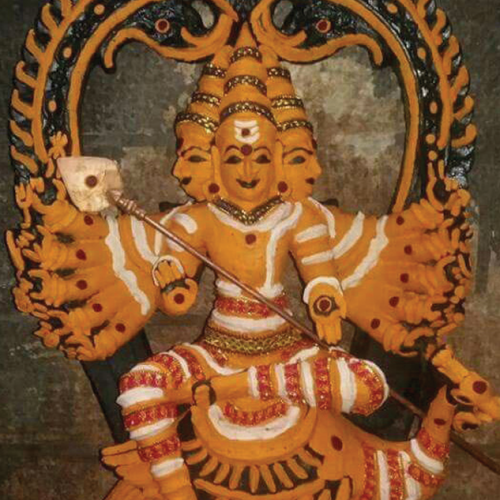
Lord Subramhanya, adorned with a saffron-colored face and golden jewelry, bestows His divine blessings upon devotees, granting them access to heavenly realms and instilling fearlessness. Holding Shakti, Kukkuta, and a Lotus Flower in His hands, he fulfills all desires, wishes, and needs. As the Commander-in-chief of the celestial army (Surasena), he rides a majestic Peacock (Vaahan). With Twelve Arms and Six Faces, He protects the Gods (Devataas) and Saints from adversities, having vanquished formidable demons like Thaarakasura. Lord Subramhanya is revered as the source of intellectual growth (Buddhi Vivardhana).
Worshiping the beloved son of Parvathi and Parameswara, who eradicates internal and external enemies and brings victory, is encapsulated in the Shatrusamhara (elimination of enemies) or Sarvaabheeshta Phalaprada (fulfillment of all desires) Subramanya Trishathi, involving the recitation of 300 sacred names. Devotion, coupled with the chanting of these 300 names using Moolamantra and Beejamantraas, and offering six types of flowers and Naivedyam, ensures that all aspirations are realized, and both internal and external adversaries are vanquished, bringing profound peace to the worshipers.
Details of the Pooja held at the Peetam
Daily Seva

Shri Adi Shankara Paduka Pooja
Shri Adi Shankara Paduka Pooja
Worshipping the Padukas of Sri Adi Shankara represents humility, devotion and surrender of ego.By bowing the head, the highest point of the body, to the feet of the Guru, devotion to the Guru leads to the supreme wisdom and guidance of knowledge.Through this, we find a way to abandon our ego and pride and reach out to divine knowledge.It is a ritual of invoking Him in the first part of the puja for His permanent presence throughout the entire puja.It is a Hindu practice to worship the shoes of a Guru as a sign of respect, reverence, and gratitude for the knowledge and guidance received from him through this service.

Shri Maha Ganapati Pooja, Homa
Shri Maha Ganapati Pooja & Homa
This puja is performed to seek the blessings and guidance of Lord Ganesha and to remove any obstacles that may hinder one’s progress or success. Ganesha is believed to be the lord of beginnings and the remover of obstacles, and performing the Ganpati Puja Homa is believed to grant all one prays for, bringing prosperity and success. It is believed that this ritual brings peace, prosperity and good fortune to those who participate. It is also used to mark the beginning of a new project, along with overcoming obstacles with the blessings of Lord Ganesha.It is also performed to ward off troubles or seek protection from negative energies.

Shri Durga Saptashati Parayanam
Shri Durga Saptashati Parayanam
Reciting the 700 verses of the Durga Saptashati, also called Devi Mahatmya, glorifies the supreme power of the Divine Mother. The parayanam protects devotees from negativity and evil forces. It inspires courage, resilience, and inner strength to face life’s challenges. Regular chanting attracts prosperity, happiness, and spiritual insight. The ritual purifies the mind and creates a deep connection with the Goddess. It is especially powerful during Navratri, but benefits extend throughout the year. Devotees experience spiritual growth, emotional balance, and the removal of obstacles. The seva reinforces faith and devotion in the path of righteousness.

Shri Mangala Narayani Pooja
Shri Mangala Narayani Pooja
This puja is dedicated to Goddess Mangala Narayani, a manifestation of divine motherly energy. It involves rituals like abhishekam, alankaram, meditation, and chanting of sacred mantras. Devotees perform this seva to receive blessings for peace, prosperity, and spiritual upliftment. The pooja also offers remedies for challenges in life, health issues, and mental disturbances. Witnessing or participating in this puja is considered highly auspicious and empowering. It strengthens devotion and fosters a sense of inner harmony. Regular participation brings protection, guidance, and divine grace into one’s life. The seva nurtures both spiritual and material well-being.
Shri Rudrabhishekam
Shri Rudrabhishekam
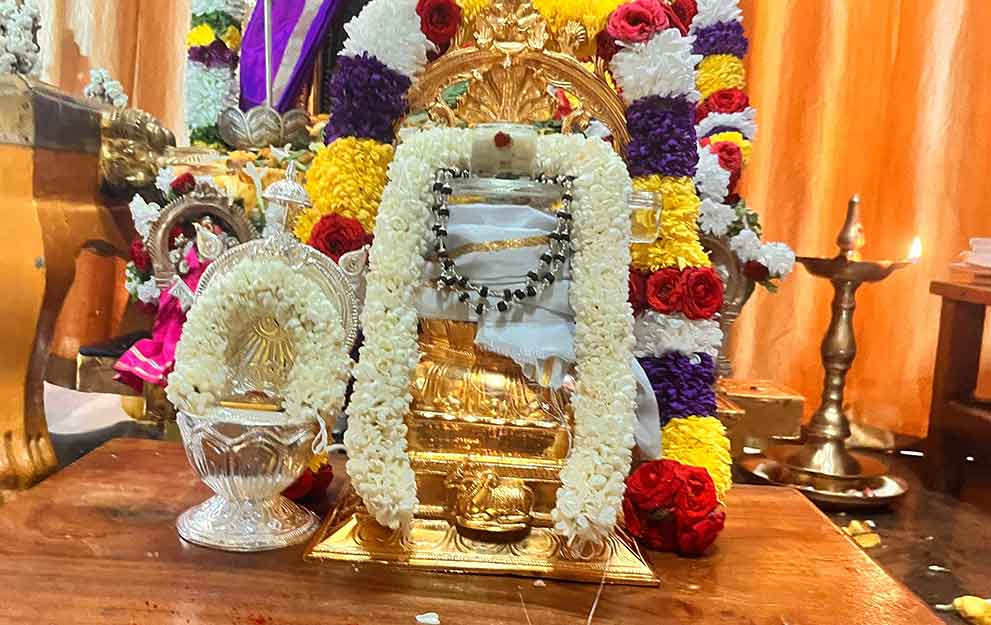
Sri Rudrabhishekam is a sacred Vedic ritual dedicated to Lord Shiva in the form of the fierce Rudra.This is the abhishekam performed on the Shivalinga with water, milk, curd, ghee, honey, and fruit juices while chanting the mantras of Shri Rudra (Namaka and Chamaka) to the beloved Lord Shri Parameshwara.This puja is performed for protection and well-being, to avoid harm from enemies, to seek the grace of Rudra and to attain long life. It is also performed as Mrityunjaya, the universal physician, to cure sorrow and disease, and to remove the evil of death.

Bhagavati Seva
Bhagavati Seva

Ekantha Seva
Ekantha Seva
Monthly Seva

Sankashata Hara Chaturthi Pooja
Performed on every Krishna
Paksha Chaturthi.
Shri Sankashta Hara Chaturthi Pooja
Dedicated to Lord Ganesha, this monthly puja is observed on Krishna Paksha Chaturthi. Devotees fast, offer prayers, and perform rituals to seek the removal of difficulties and obstacles in life. The day is considered highly auspicious for overcoming challenges and fulfilling wishes. The puja includes chanting mantras, offering prasadam, and moon-sighting ceremonies. It brings mental peace, spiritual growth, and prosperity to devotees. Observing this seva fosters discipline, devotion, and a closer connection to Lord Ganesha. Regular participation ensures well-being, protection, and divine blessings for personal and family life.

Shri Shatru Samhara Subramanya Pooja
Observed on every Vishaka
Nakshatra.

Ekadasa Rudrabhishekam
Conducted on every Arudra
Nakshatra.
Ekadasha Rudrabhishekam
Performed on every Arudra Nakshatra, this ritual involves eleven rounds of Rudrabhishekam for Lord Shiva. It purifies the devotee’s mind, body, and surroundings. The seva removes negativity, cures doshas, and grants long life, health, and peace. Devotees receive divine blessings for strength, courage, and prosperity. The ritual enhances spiritual growth and deepens devotion toward Lord Shiva. It is believed to attract positive energies and remove obstacles from one’s path. Regular practice fosters stability, protection, and inner harmony in life.
Shri Lalitha Sahasranama Homam
Performed on every Krishna
Paksha Ashtami.
Shri Lalita Sahasranama Homam
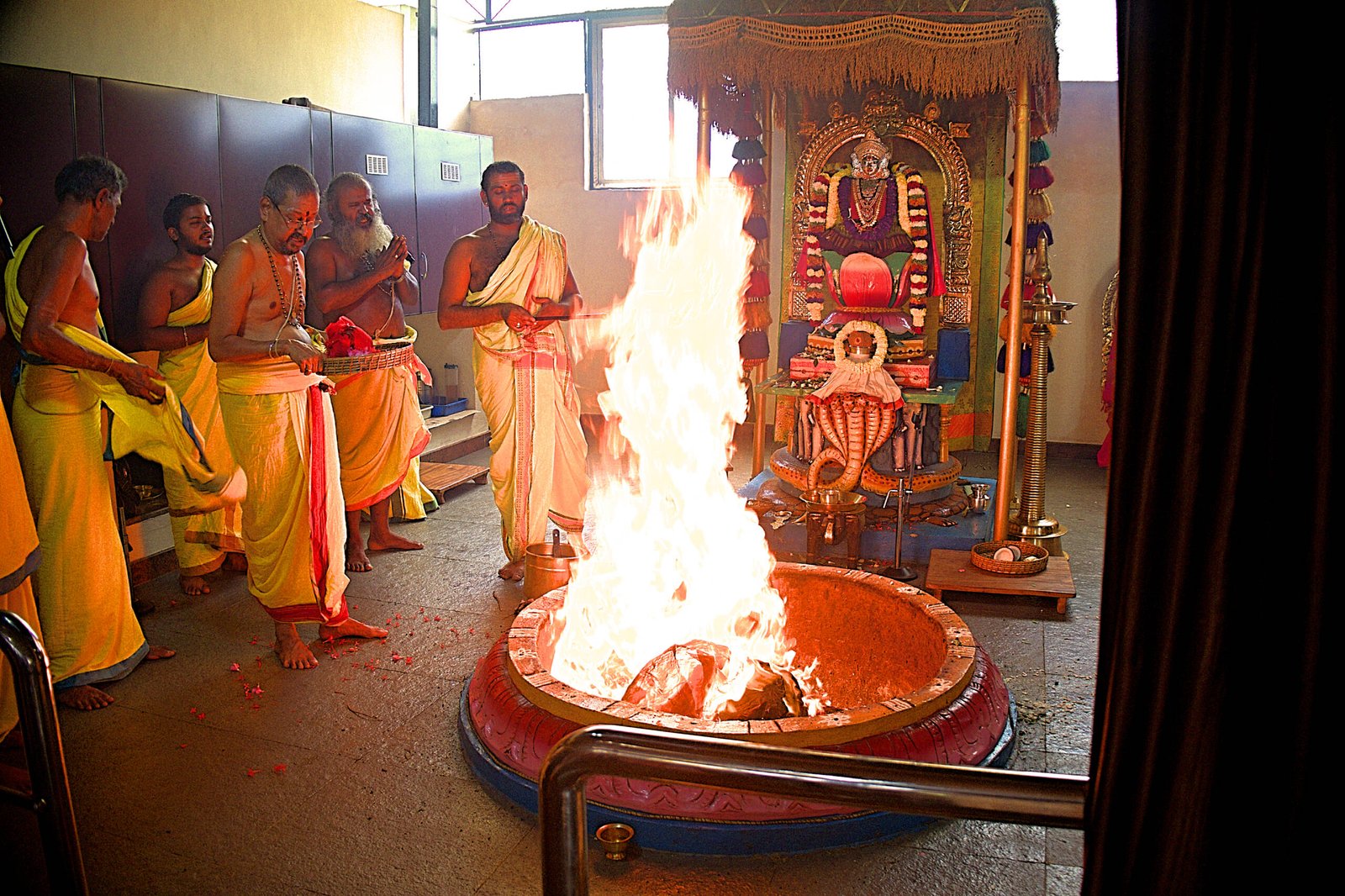
This powerful homam invokes Goddess Lalita Tripura Sundari through the chanting of her thousand sacred names. It is performed for protection, prosperity, and spiritual fulfillment. The fire ritual purifies the mind, removes negativity, and strengthens faith. Devotees experience enhanced intuition, courage, and guidance in life. It brings harmony, abundance, and divine blessings into personal and family life. The seva fosters inner peace, mental clarity, and devotion toward the Goddess. It is highly auspicious for overcoming difficulties and fulfilling righteous desires.
Shri Deepa Durga Pooja
Held on every Krishna Paksha
Chaturdashi.
Shri Deepa Durga Pooja
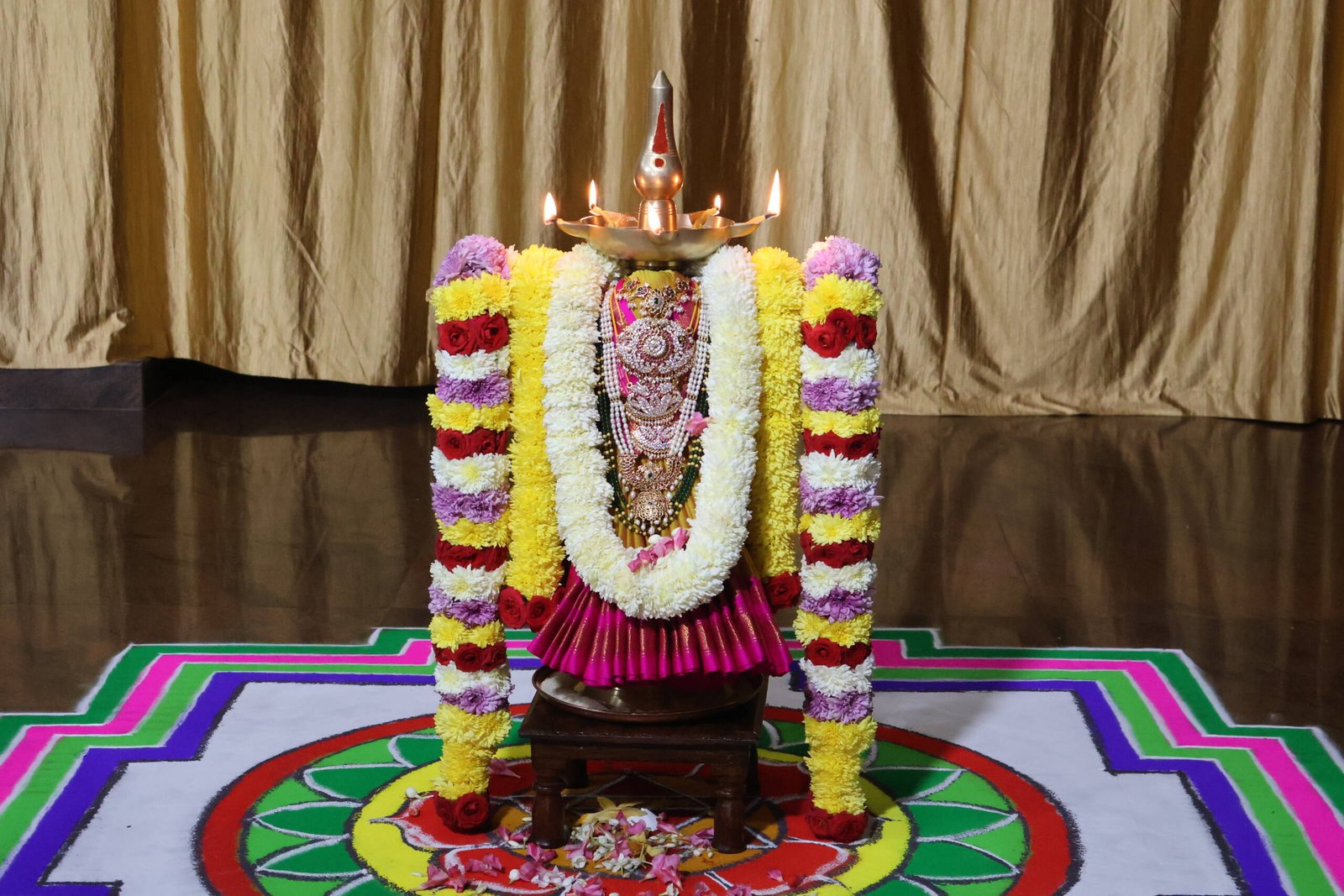
Performed on every Krishna Paksha Chaturdashi, this puja involves lighting lamps and offering them to Goddess Durga. It removes negativity, obstacles, and misfortunes while attracting prosperity and harmony. The ritual purifies the home and mind, strengthens spiritual discipline, and encourages devotion. Devotees experience mental peace, emotional balance, and divine blessings. It is considered highly auspicious and empowering for both personal and family life. Regular participation fosters spiritual growth, protection, and overall well-being. The seva nurtures devotion, discipline, and inner strength.

Shri Bhadrakali Pooja
Conducted on every Amavasya.
Shri Pratyangira Homam & Shri Bhadrakali Pooja
Performed every Amavasya, this powerful homam invokes Goddess Pratyangira and Goddess Bhadrakali to remove evil forces, black magic, and negative energies. It offers strong spiritual protection and courage to devotees. The ritual cleanses the mind, body, and environment of harmful influences. Devotees experience relief from obstacles, better health, and improved well-being. The puja strengthens spiritual resilience, devotion, and confidence. It is highly auspicious for protection, prosperity, and personal empowerment. Regular performance fosters divine blessings and spiritual growth.

Shri Chandika Homam
Performed on every full moon day.

Sankaramana Pooja
Observed at the time of seasonal transitions.
Sankaramana Pooja
Offered during seasonal transitions, this puja honors cosmic changes and invokes balance and renewal. It strengthens the devotee’s connection with the natural rhythms and divine energies. The ritual brings harmony, protection, and blessings for health, prosperity, and spiritual growth. It purifies the mind, home, and surroundings. Devotees experience clarity, inner peace, and emotional stability. The seva fosters devotion, discipline, and receptiveness to divine guidance. Regular practice ensures spiritual renewal and auspiciousness during changing seasons.

Srinivasa Deepa Pooja
Conducted on every Sravana
Nakshatra.
Shri Sudarshana Homam
Dedicated to Lord Vishnu’s Sudarshana Chakra, this homam is performed every Sravana Nakshatra for protection, removal of obstacles, and relief from ailments. The ritual purifies negative energies and strengthens spiritual resilience. Devotees receive blessings for health, wealth, and overall well-being. It fosters courage, confidence, and mental clarity. Regular performance deepens devotion to Lord Vishnu and attracts positive energies. The seva is highly auspicious for personal, family, and professional life. It also nurtures spiritual growth, discipline, and divine grace.
Annual Seva
Chaturmasya Vratham
Chaturmasya Vratham
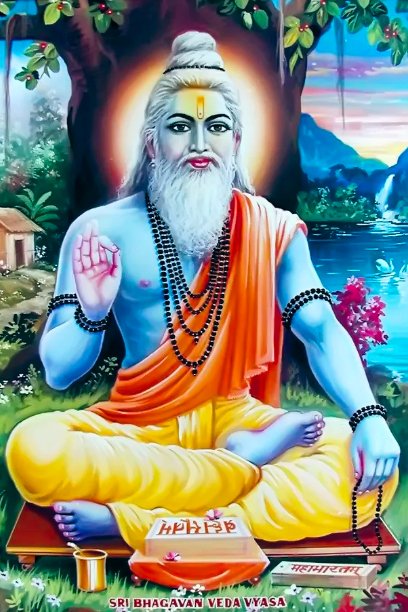
The Chaturmasya begins on the Poornima (full moon day) in the month of Aashaada. This day is called ‘Guru Poornima’. On this sacred day, worship is offered to Brahma Vidyacharyas – the great luminaries of hoary antiquity, who through their Supreme grace, have bestowed the knowledge of Brahman Brahma Vidya through a long, continuous and uninterrupted lineage of Acharyas.The day is also called “Vyasa Poornima” and the Puja performed is titled “Vyasa Puja”. In our Guru Parampara that originates from Ishwara Himself, Bhagavan Veda Vyasa is held with the highest esteem by all followers of Sanatana Dharma. Bhagavan Veda Vyasa has brought about everyone’s welfare by classifying the Vedas into four, by summing the messages of the Upanishads in His Brahma Sutras, and by penning the great epic Mahabharata as well as the eighteen Puranas. Sri Shuka, Sri Gaudapada and Sri Govinda Bhagavatpada kept the light of the Parampara burning. Then came the Great Master Sri Adi Shankaracharya, who revived Sanatana Dharma and carried it far and wide throughout Bharata Varsha.
Vasantha Navaratri
Vasantha Vratham
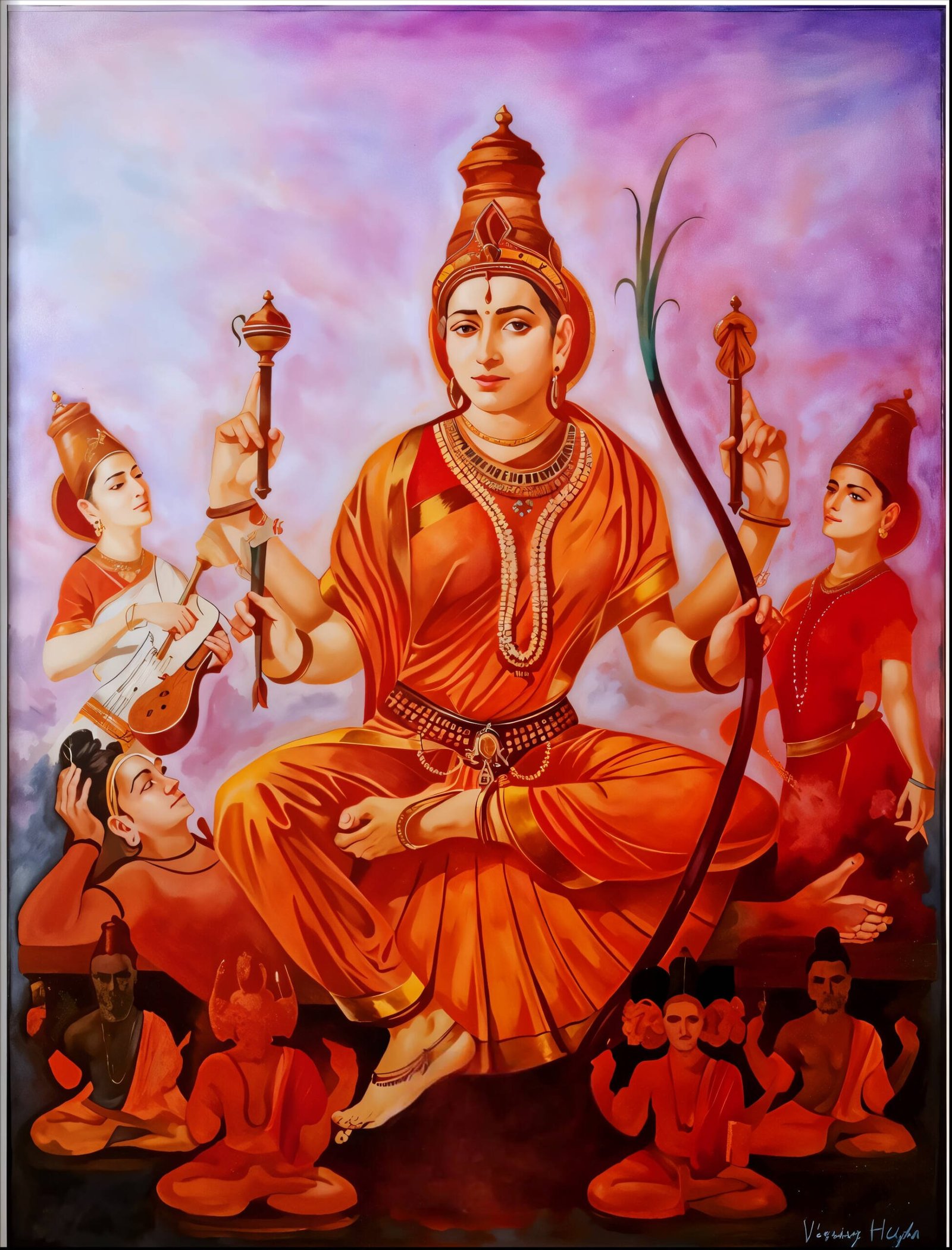
It is celebrated for nine days during the spring season, starting immediately after the new moon day of the month of Panguni, i.e. Chaitra Shukla Pratipada (prathamai). The Telugu New Year, also called Yugadi, is celebrated as well. This is the Navaratri of Lalitha Herself. This is indeed, a very important festival for Shrividya devotees. Shri Rama Navami festival also falls on the ninth day of this Navaratri. Given that Shyamala is one among the 10 goddesses called Dasamahavidya, and also has connotations with Shri Ramachandra, this occurrence signifies deeper meaning. In addition, there also exists a Puranic reference which says her aspect is indeed the Ramavataram. After all, it would be no surprise to notice that both of them are of the color Shyama! In the Lalitha Sahasranam, it is stated: “Karanguli Nakhotpanna Narayana Dashakruti.” Which means, the 10 incarnations of Narayana arose from the nails from the fingertips of Lalita. The Brahmanda Purana says that she created and destroyed the various demonic spirits of Bhandasura. In addition, there also exists a Purana that says that Goddess Parvati is the form of night and Lord Shiva is the form of day. “The purity of Bhagavata Shravana, the purity of Bhagirathi’s Water, Purity of Shakti Padadhyanam, and Siddha Navaratri Vratham are immeasurable.” The scriptures teach that the nectarine teachings of Bhagavata Mahapuranam, the water of Goddess Ganga, meditation of the Goddess’s two feet, and the observance of the Navaratri fast grant wisdom to devotees. Navaratri, a festival of nine nights, is a sacred time to worship the divine Parashakti Jaganmata. It is recorded in the Tantras that even Shri Parameshwara observed the Navaratri fast before vanquishing the Tripurasuras. According to sages, the year is divided into six seasons, each spanning two months—and among these—the season of spring which is called Kusumakara or Vasantha by Shri Krishna, is considered the best. Spring is a time of renewal, when life begins afresh, the harvest is complete, prosperity abounds, and joy fills the hearts of people. Celebrating Vasantha Navaratri brings blessings to the world and fosters devotion and liberation through its unique yoga. Most of all, this festival is resolutely dedicated to the worship of Shri Lalithambika. Let us continue to praise the Goddess and pray for the strength to do so in the numerous Vasantha Navaratris to come.

Ashada Navaratri
Ashada Vratham
This festival is again celebrated for nine days, beginning with the first new moon of the month of Aadi, and commences from the following day—also known as Ashada Shukla Pratipada (prathamai). In the Shridevi Mahatmiyam, Varahi is one of the Saptamatrus (seven mothers) who assisted Chandi Devi in her battle against the armies of Shumbha and Nishumbha. She is described as having a human body with eight arms, a boar’s head, and three eyes. In the Shri Vidya Parampara, she is also referred to as Dandanatha—the female commander of Lalita’s armies, embodying the power of Shri Vidya. Varahi, meaning “the boar-faced one,” symbolizes the destruction of evil forces that hinder devotees’ spiritual progress. She paralyzes enemies and guides devotees toward Brahma Vidya—Shri Vidya. Known also as Panchami, she, along with Kurukulla, is regarded as a parental figure in the Shri Chakra, where Kurukulla represents the full moon, and Varahi symbolizes the new moon. Varahi also embodies the light (Prakasha) aspect of the goddess Parashakti, while Kurukulla represents the reflexive (vimarsha) aspect. In another form, Varahi is regarded as one of the yoginis who assumes the shape of a boar, lifting the earth with her tusks to confer blessings upon all beings. She is depicted with eight arms, a boar’s face, and three eyes. In some meditative descriptions, she sits under a palm tree as the trusted assistant and chief advisor of the goddess, earning the title Chaitanya Bhairavi, the consort of the strength of devotees. Known as a commander of armies, Varahi is detailed in the Varahi Tantra, where she rides a chariot drawn by boars and resides in the ocean of sugarcane extract (ikshu)—one of the four oceans surrounding Lalita. In Shri Vidya Upasana, she is worshipped in various forms, including Laghuvarahi, Swapnavarahi, and Thiraskarini, depending on the sect. During her Navaratri, worship should be conducted under the guidance of Shri Vidya Gurus. Her mantras are accessible only after significant spiritual achievements. Shriveera Kavirayar’s Varahimaala is a renowned text, valued for its practical approach and the concealed mantras it contains, which reward those who diligently seek and study it.
Shri Chandika Navaratri
Shri Chandika Vratham
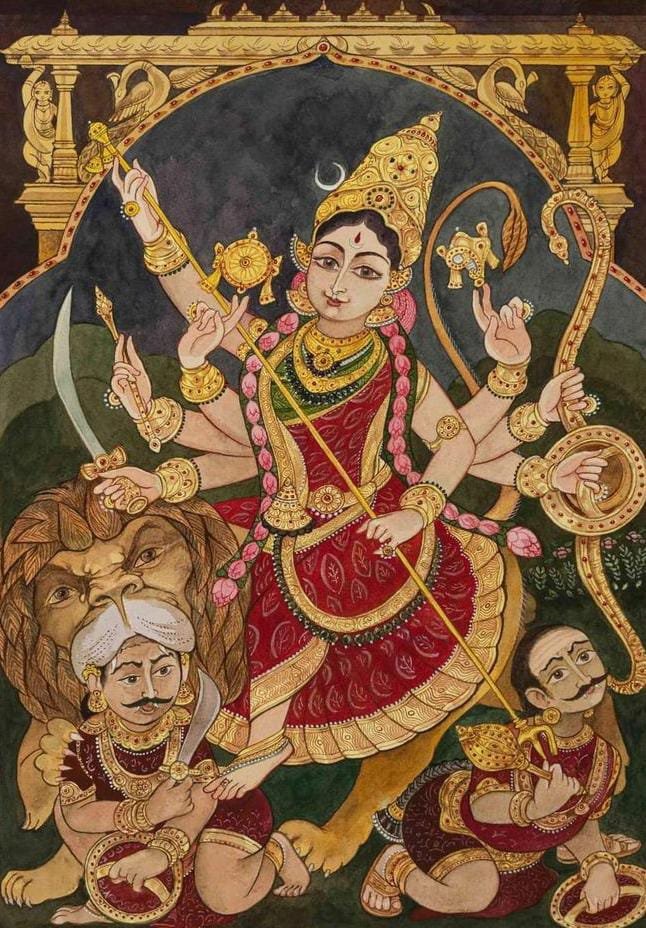
This festival too, like the other Navaratris is celebrated for nine days starting from the new moon of the month of Purattasi, and formally commencing from the next day—popularly knowns as Asvayuja Shukla Pratipada (prathamai), and is also known as Durga, Lakshmi, and Saraswati Pooja. This occasion brings immense joy to practitioners, as it is a time of devotion and celebration. During this period, women and men create decorative displays of dolls, known as Kolu, and observe the nine days as a unique festival. Daily, they invite women to their homes, offer them treats like sundal and turmeric, sing devotional songs, and revel in the festivities. According to the Devi Mahatmiyam, this period commemorates Parashakti’s triumph over demons such as Mahishasura, Shumbha, Nishumbha Chanda, Munda, and Raktabeeja, in various forms, to protect the gods. Parashakti is revered as Chandika Parameshwari, and is also called Chamunda since her form and temples are associated with the Navakshari mantra. This Goddess is said to have chanted the Akshara Laksha. The Devi Mahatmiyam, a seven-part text comprising 700 mantras, holds significant spiritual value, and its recitation is believed to require Yogyatha, or a level of spiritual readiness. The text is regarded as a divine revelation by the Goddess herself, of which a part exists in the Markandeya Puranam. “एकैवहं जग ि तीया का ममापरा” “It is only I who exist in this Jagat, and but who could be my second” (It is only Devi who exists in the world, and the universe itself is Her) The only eternal power in the world is the Goddess, and there is no other. All adornments and incarnations belong to her alone. As Saraswati, she grants knowledge and education; as Mahalakshmi, she bestows wealth and sustenance; and as Chamundi Durga or Mahakali, she dispels the fears of her devotees. Despite her many names and forms, the essence of the Goddess remains the same, embodying profound philosophical truth through her various manifestations and decorations. Once, in the country of Kosala, King Dhruvasindhu ruled with two wives. Upon his death, tradition dictated that his first wife’s son, Sudarshana, should inherit the throne. However, the king’s second wife conspired to crown her own son and banished Sudarshana and his mother to the forest. They sought refuge at Bharadwaja Rishi’s ashram, where Sudarshana devoted himself to the worship of Shakti. Pleased by his unwavering devotion, the Mother appeared to him, granting him the divine powers needed to overcome the conspiracy and reclaim his rightful place as king. Seeing Sudarshana’s growing power, the king of Kashi married his daughter to him, forging an alliance with Kosala. This alliance provoked the king of Kosala into battle, where Sudarshana emerged victorious, killing him and becoming the ruler of Kosala—as was meant to be. In gratitude to the Goddess who granted him victory, Sudarshana celebrated for ten days, a tradition believed to have evolved into the modern Navaratri festival. Sharad Navaratri begins on Shukla Pratipada (prathamai) and concludes on Navami, followed by Vijaya Dashami. It is said that listening to or reading the story of Ambal, especially on Ashtami and Navami, protects one from ailments like measles and helps eliminate planetary defects. This practice is also believed to reunite those who are estranged. For those pursuing arts such as music, dance, and sports, or beginning the sacred practice of Vidyabhyasam (Aksharabhyasam), Vijayadashami during Purattasi is considered auspicious. Saraswati Pooja, celebrated during these nine days, honors the Goddess Saraswati, also known as Sharada. The festival emphasizes the need for education, wealth, and courage—qualities essential for a prosperous life. Worship during this time venerates the Goddess in her three aspects: (kalaimagal[sarswathy], Malaimagal[parvathy] and Alaimagal[lakshmi]) with the month of Purattasi itself being associated with Mercury. Everything in life requires power. Just as eyes are needed to see and ears to hear, the faculties we possess enable us to function and achieve success. Without them, life’s potential remains unrealized. To accomplish any task, a source of power is essential, and the ultimate provider of all power is Parashakti. Parashakti is formless, akin to electricity—it cannot be seen but can only be felt. However, when we choose to give this energy a form to worship, it manifests with special attributes. It is said that upon waking each morning, one should first look at their hands and envision Lakshmi at the fingertips, Saraswati in the middle, and Durga at the base, offering prayers to them. Wealth is the foundation of human life, and thus Mahalakshmi, the deity governing wealth, is essential to guide its wise use. Saraswati, the embodiment of education, follows as the guide to wisdom and understanding. Lastly, courage and strength to protect and uphold all achievements are symbolized by Durga. By offering prayers to these three powers each morning, one can invite all the benefits of life with ease. This daily practice was once a staple of traditional life but has gradually diminished, becoming limited to special occasions. Festivals like Navaratri and Shivaratri are observed to ensure that such devotion is maintained at least during these sacred periods. During Navaratri, initiated Shrividya devotees perform Navavarana Pooja in accordance with the Shri Vidya Paddhati, worshipping the divine forms of Lalitha and Durga.
Shyamala Navaratri
Shyamala Vratham
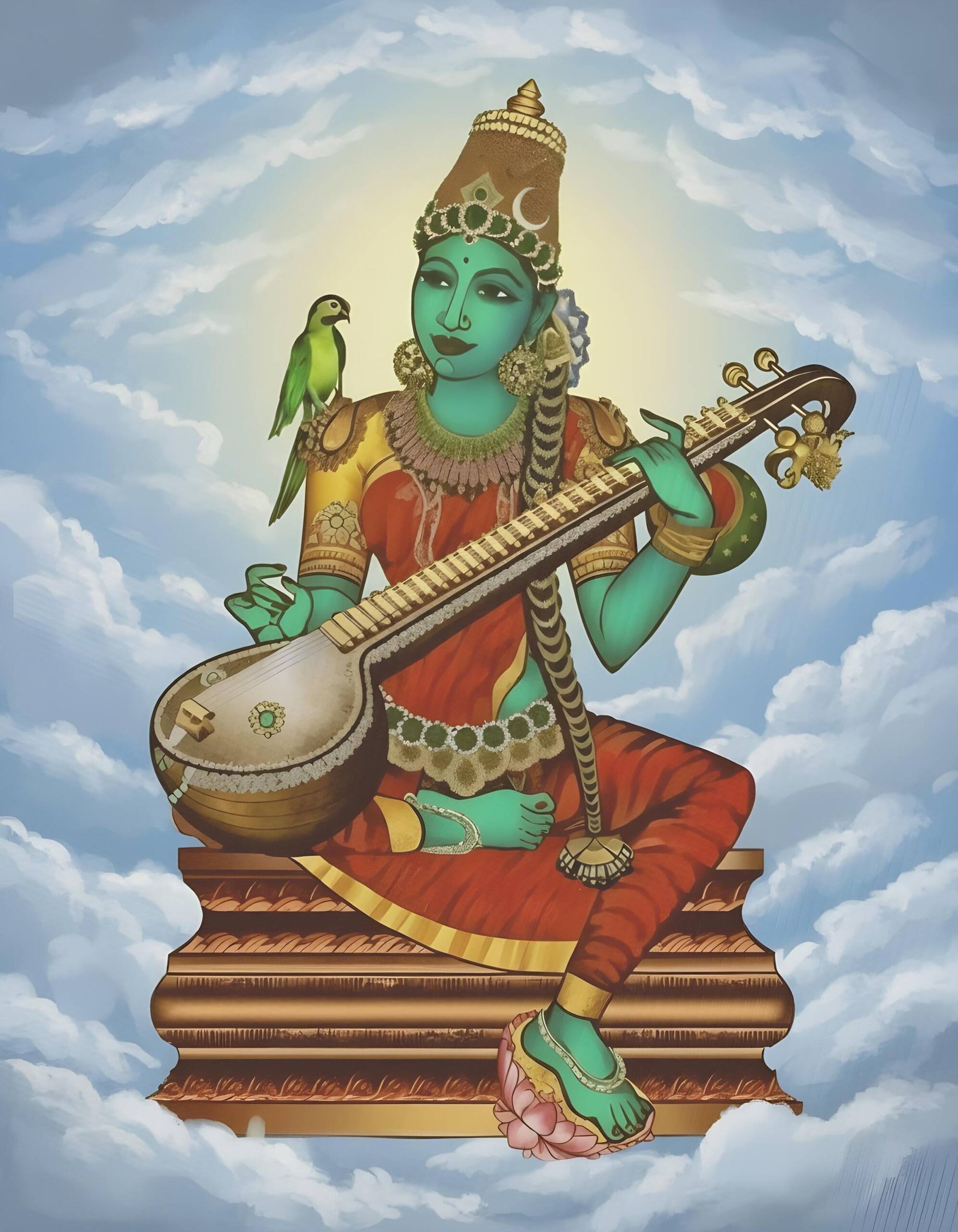
Shyamala Navaratri, also known as Rajamathangi Navaratri, is celebrated for nine days starting from the new moon day of the Thai month, and commencing formally from the day of Magha Shukla Pratipada (prathamai). This Navaratri honors the goddess Shyamala, also called Shri Raja Shyamala, Shri Mathangi, and Mantrini, who is not as commonly known across India. She is the incarnation of the ascetic daughter of Mathanga Muni and is revered as the ninth among the Dasha Mahavidyas. Shyamala is celebrated as the deity of arts, eloquence, intellect guided by righteousness, and the mastery of education. Known as the supreme goddess of all Vedic mantras, she is called Mantrini and serves as the great minister of Shri Lalitha Tripurasundari—who governs and blesses the world. Shyamala Navaratri is dedicated to worshipping and celebrating this powerful goddess. In Shri Vidya Upasana, the goddess Shyamala is worshipped in various forms, including Laghushyamala, Vagvadini, and Nakulividya. These Vagvadini Devis are believed to have chanted Lalitha’s thousand holy names in Her divine court. Rajamatangi Devi, the deity revered by the great poet Kalidasa, is said to have blessed him with eloquence and creativity, enabling him to compose celebrated epics. Among these, Shrishyamaladandakam, a work of poetic brilliance composed in Dandaka Praasham, is renowned for its exceptional beauty.

Skanda Shashti Mahotsavam
Chaturmasya Vratham
The Chaturmasya begins on the Poornima (full moon day) in the month of Aashaada. This day is called ‘Guru Poornima’. On this sacred day, worship is offered to Brahma Vidyacharyas – the great luminaries of hoary antiquity, who through their Supreme grace, have bestowed the knowledge of Brahman Brahma Vidya through a long, continuous and uninterrupted lineage of Acharyas.The day is also called “Vyasa Poornima” and the Puja performed is titled “Vyasa Puja”. In our Guru Parampara that originates from Ishwara Himself, Bhagavan Veda Vyasa is held with the highest esteem by all followers of Sanatana Dharma. Bhagavan Veda Vyasa has brought about everyone’s welfare by classifying the Vedas into four, by summing the messages of the Upanishads in His Brahma Sutras, and by penning the great epic Mahabharata as well as the eighteen Puranas. Sri Shuka, Sri Gaudapada and Sri Govinda Bhagavatpada kept the light of the Parampara burning. Then came the Great Master Sri Adi Shankaracharya, who revived Sanatana Dharma and carried it far and wide throughout Bharata Varsha.